
Trash bags
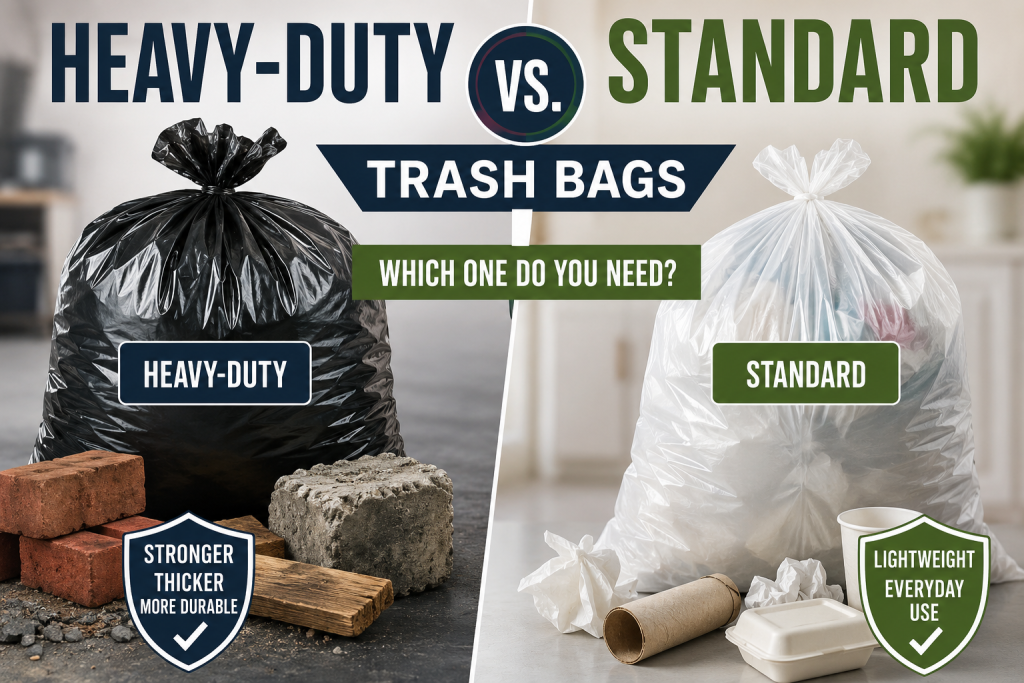
Heavy-Duty vs. Standard Trash Bags: Which One Do You Really Need?
Jun
Have you ever had a trash bag tear open while taking out the garbage? Few things are more frustrating than cleaning up spilled waste because you chose the wrong bag for the job.
When shopping for trash bags, you’ll typically encounter two main options: heavy-duty trash bags and standard trash bags. While they may look similar at first glance, they serve very different purposes.
In this guide, we’ll compare heavy-duty and standard trash bags, explain when to use each type, and help you save money by choosing the right option for your needs.
What Are Standard Trash Bags?
Standard trash bags are designed for everyday household waste. They’re commonly used in kitchens, bathrooms, bedrooms, and offices where trash consists mainly of lightweight items.
Common Uses for Standard Trash Bags
- Food packaging
- Paper waste
- Tissue products
- Lightweight household garbage
- Office waste
- Bathroom trash
Advantages of Standard Trash Bags
✅ Affordable
✅ Widely available
✅ Ideal for everyday use
✅ Lightweight and easy to store
Limitations
❌ More likely to tear under heavy loads
❌ Not ideal for sharp objects
❌ Lower puncture resistance
If your household primarily generates normal daily waste, standard trash bags are often the most cost-effective choice.
What Are Heavy-Duty Trash Bags?
Heavy-duty trash bags are manufactured with thicker plastic and enhanced durability. They are specifically designed to handle heavier, bulkier, and potentially sharp materials.
Common Uses for Heavy-Duty Trash Bags
- Construction debris
- Yard waste
- Renovation projects
- Commercial cleaning
- Warehouse waste
- Large household cleanouts
- Moving and decluttering projects
Advantages of Heavy-Duty Trash Bags
✅ Higher weight capacity
✅ Superior puncture resistance
✅ Reduced risk of leaks and tears
✅ Better for bulky items
Limitations
❌ Higher cost
❌ May be unnecessary for everyday trash
❌ Uses more material than standard bags
Heavy-duty bags are an excellent investment when dealing with demanding cleanup jobs where durability matters most.
Heavy-Duty vs. Standard Trash Bags: Side-by-Side Comparison
| Feature | Standard Trash Bags | Heavy-Duty Trash Bags |
|---|---|---|
| Thickness | Thin to Medium | Thick |
| Weight Capacity | Light to Moderate | Heavy |
| Tear Resistance | Moderate | High |
| Puncture Resistance | Low to Moderate | High |
| Cost | Lower | Higher |
| Best For | Household Waste | Construction, Yard Work, Commercial Use |
| Durability | Good | Excellent |
When Should You Choose Standard Trash Bags?
Standard trash bags are the best option when:
- Taking out regular household trash
- Managing office waste
- Disposing of lightweight materials
- Looking for the most economical solution
For most families, standard bags work perfectly for daily use and help reduce waste management costs.
When Should You Choose Heavy-Duty Trash Bags?
Choose heavy-duty trash bags if you’re handling:
- Sharp objects
- Large cleanup projects
- Landscaping debris
- Heavy materials
- Commercial waste
- Garage cleanouts
Using a stronger bag can prevent tears, spills, and unnecessary cleanup time.
Cost vs. Performance: Which Offers Better Value?
Many people assume heavy-duty bags always provide better value because they’re stronger. However, that’s not necessarily true.
If you’re only disposing of everyday household garbage, standard trash bags often provide the best return on investment.
Heavy-duty bags become cost-effective when the risk of breakage, leaks, or punctures increases.
The key is matching the bag strength to the task.
Environmental Considerations
Many manufacturers now offer environmentally conscious trash bag options, including:
- Recycled-content trash bags
- Biodegradable alternatives
- Compostable waste bags
- Reduced-plastic packaging
Regardless of bag type, choosing the correct size and strength can help minimize waste and improve efficiency.
Expert Tips for Choosing the Right Trash Bag
Consider the Weight
Heavier waste requires stronger bags.
Check Bag Thickness
Thicker bags generally offer greater durability.
Think About Contents
Sharp edges can puncture thinner bags quickly.
Match the Bag to the Container
A properly fitted bag reduces stretching and tearing.
Buy in Bulk
Frequently used trash bags often cost less when purchased in larger quantities.
Frequently Asked Questions
Are heavy-duty trash bags worth the extra cost?
Yes, if you’re handling heavy, bulky, or sharp waste. For everyday household trash, standard bags are usually sufficient.
Can heavy-duty trash bags hold more weight?
Generally, yes. They are designed with stronger materials and higher weight capacities.
What thickness is considered heavy-duty?
While specifications vary by manufacturer, heavy-duty bags are typically thicker than standard household bags and offer increased puncture resistance.
Which trash bags are best for yard waste?
Heavy-duty trash bags are usually the preferred choice for leaves, branches, and landscaping debris.
Final Verdict
Choosing between heavy-duty vs. standard trash bags comes down to your specific needs.
For everyday household waste, standard trash bags provide excellent value and convenience. For tougher jobs involving heavy, sharp, or bulky materials, heavy-duty trash bags deliver the durability and reliability needed to get the job done without frustration.
By selecting the right trash bag for each task, you’ll save money, reduce waste, and avoid messy cleanup situations.
Whether you’re managing household garbage, tackling a renovation project, or handling commercial waste, understanding the difference between heavy-duty and standard trash bags ensures you’re always prepared.
